
The Festool Domino Changed How I Build Furniture
A Deep Dive Into Loose Tenon Joinery — and Whether the DF 500 Is Worth $1,400
Before I owned the Festool Domino, I spent a lot of time doing mortise and tenon joints the traditional way. Layout lines, marking gauge, drill press to hog out the waste, then chisels to square the mortise. For every joint. On every piece.
That process works. It produces strong joints. It also takes a long time, it rewards precision you don't always have at 10pm after a full workday, and the margin for error compounds fast when you're building a six-legged dining table.
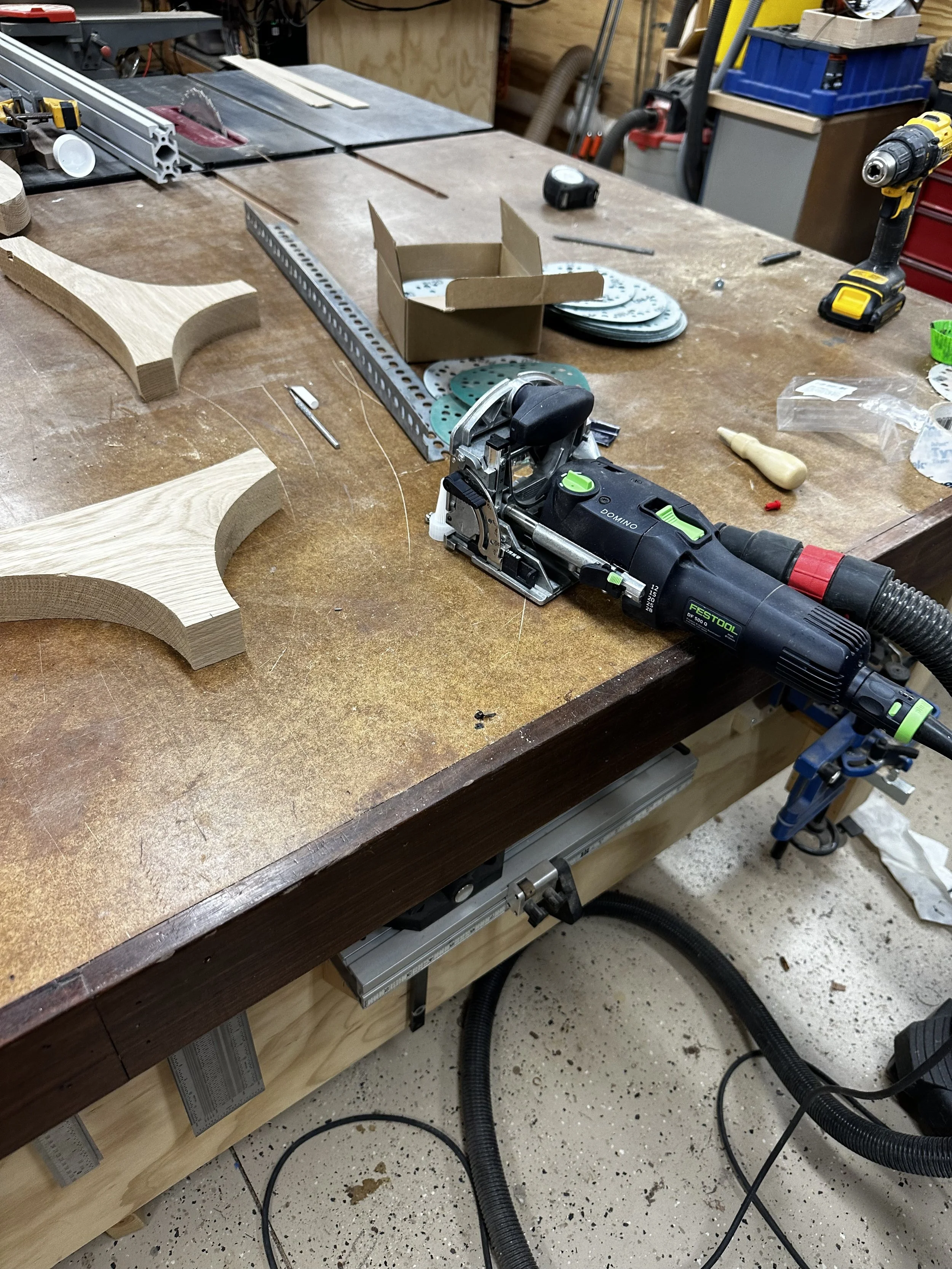
I bought the Festool Domino DF 500 about three years ago after watching a friend use one on a cabinet build. I spent two weeks convincing myself I didn't need it. I was wrong. Here's the honest picture of what it does, where it fits in a real shop workflow, and whether the price makes sense for you.
"The Domino didn't make me a better woodworker. It made me a faster one, with more precise results than I got doing it by hand."
The Traditional Approach — And Why It Has Real Costs
Mortise and tenon joinery is as old as furniture making. It's strong, it's proven, and every serious woodworker should understand how it works. But let's be honest about what traditional M&T actually costs in shop time.
For a standard table apron-to-leg connection, you're looking at layout time for each joint, drilling out the mortise waste (ideally with a drill press or hollow chisel mortiser), then squaring the walls with a chisel. Cutting the tenon on the table saw or with a dado stack. Test fitting. Adjusting. Repeat for each of the 8 joints on a typical dining table.
On a good day with sharp tools and solid focus, that's two to three hours of joinery work per table. More if the grain is tricky or you're tired. Doweling is faster but weaker and less forgiving of alignment drift. Pocket hole joinery is faster still, and fine for face frames, but I wouldn't build a table I want to last 40 years with pocket screws.
This is the problem the Domino solves.
How the Domino Actually Works in the Shop
The Domino is a loose tenon joinery system. The tool cuts a mortise — it's essentially a plunge router with an oscillating bit — and you insert a pre-made floating tenon (the "domino") that spans both mating faces. Set your fence, register the tool against your workpiece, plunge. Then do the same on the mating piece. Insert the tenon. Done.
In practice, each plunge takes about three seconds. Setup takes longer — you need to set the depth, width, and fence height for your specific joint — but once you're dialed in for a batch of identical joints, you're running fast. A set of table apron-to-leg joints that used to take me two hours now takes about 20 minutes. Same structural quality. Better alignment.
The alignment is the part that matters most in production. The Domino's fence registers consistently off the face of the workpiece, which means joints that used to drift slightly because of human error in layout are now reliably flush. When you're assembling a complex case piece or a table with multiple rails, that consistency compounds into a significantly cleaner final assembly.
"A set of table apron joints that used to take two or three hours now takes 20 minutes with the same strength and easier alignment."
Real-World Use Cases: Where I Reach for the Domino
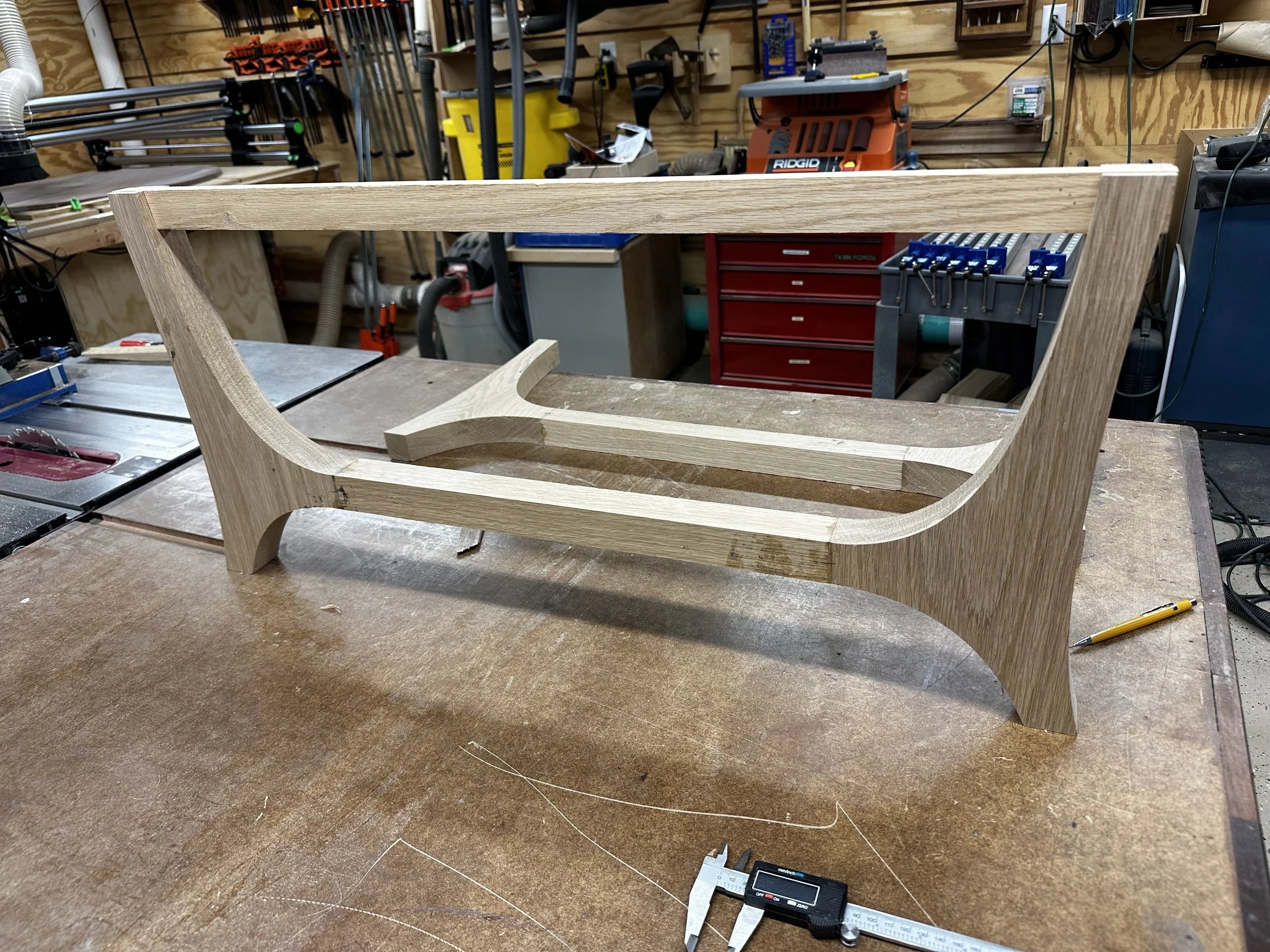
Table and chair joinery: Apron-to-leg connections, chair rail joints, stretcher connections. This is the Domino's core use case and where it excels. The ability to cut perfectly aligned mortises in both the apron and leg without layout lines is genuinely transformative.
Face frames and cabinet carcasses: For face frame stile-to-rail joints, the Domino is faster than a pocket jig and produces a flush, gap-free joint. I use 5mm x 30mm tenons for this application.
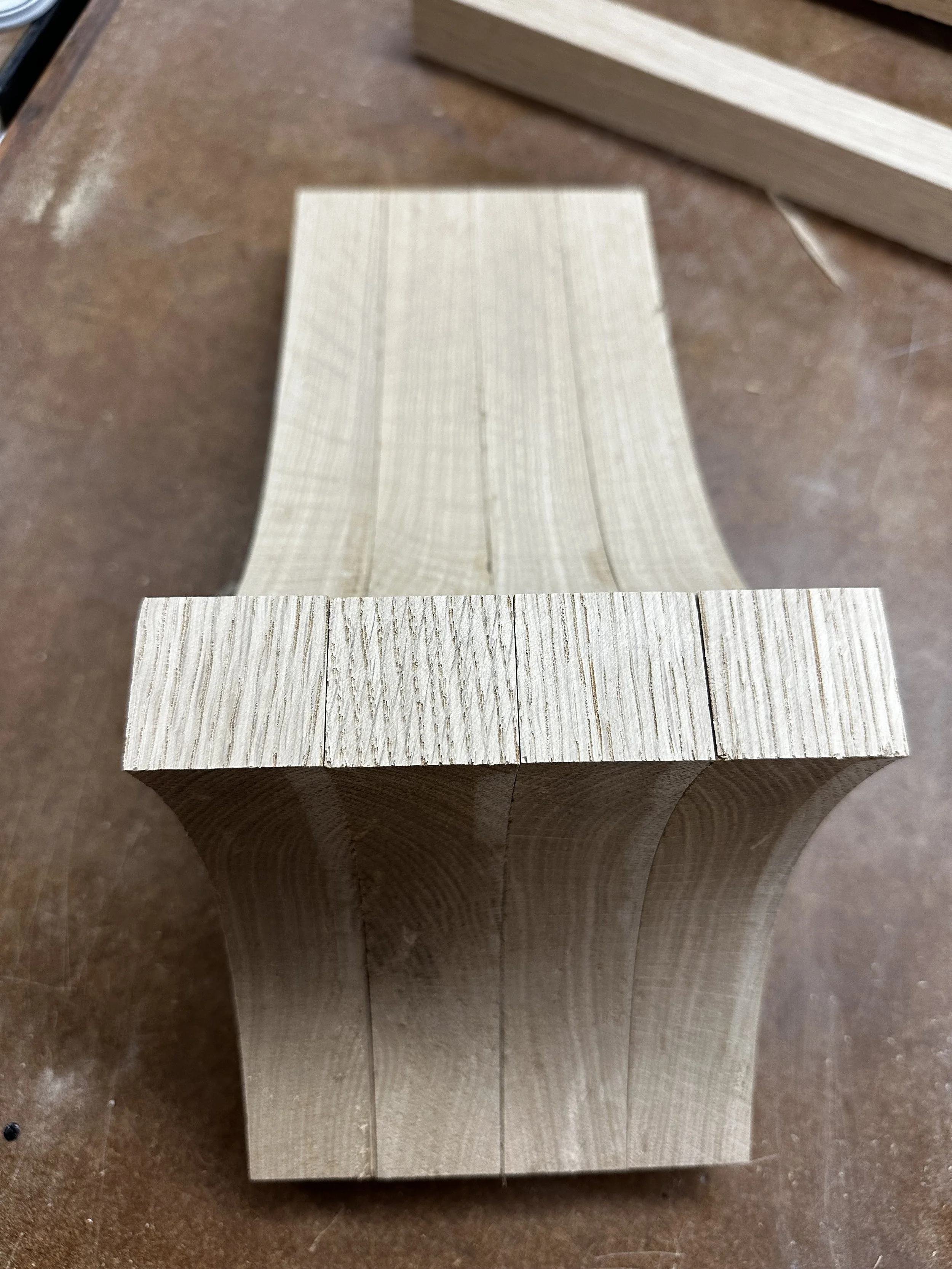
Panel glue-ups: On wide glue-ups where panels tend to shift during clamping, a few Dominos every 12 inches keep everything aligned. You're not relying on the tenon for strength — the glue does that — but the registration eliminates the bowed, stepped joints that require heavy planing to fix.
Mitered corner joints: This is an underrated application. The Domino has a 0–90° tilt adjustment that lets you cut angled mortises for mitered frame joints. Strong, invisible connection in a joint where most alternatives are weak.
DF 500 vs. DF 700: Which One Do You Actually Need?
Festool makes two Dominoes: the DF 500 (~$1,400) and the DF 700 XL (~$1,849). The difference is significant — both in price and in capability.
The DF 500 uses tenons ranging from 4mm to 10mm wide and up to 50mm long. That covers furniture joinery — tables, chairs, cabinets, face frames, panel edges. Most woodworkers building residential furniture will never need more than the DF 500 can deliver.
The DF 700 uses larger tenons: 8mm to 14mm wide and up to 140mm long. It's designed for timber framing, structural connections, large case work, and heavy doors. If you're building trestle tables with 4x4 stretchers or structural timber frames, the DF 700 is the right tool. If you're making furniture, the DF 500 handles 90% of what you'll ever need.
My recommendation: start with the DF 500. If you find yourself limited by tenon size on structural work, then evaluate the DF 700. Most furniture makers never hit the DF 500's ceiling.
The Ecosystem: Tenons, Bits, and Dust Collection
One thing Festool doesn't make fully clear in their marketing is how much the Domino costs to actually run. The tool itself is one purchase. The consumables are ongoing.
The Domino Tenon Assortment (~$85 for the DF 500 set) gives you a range of sizes and is the smart first purchase alongside the tool. In practice, 5mm, 8mm, and 10mm covers the vast majority of furniture joinery — face frames and light rail joints at 5mm, standard apron and stretcher work at 8mm, heavy structural connections at 10mm. Having that spread on hand from day one means you're not ordering tenons mid-project.
You'll also need cutter bits in the sizes you run regularly. The DF 500 ships with an 8mm bit installed, but a set of 5mm, 8mm, and 10mm Amana Tool bits gives you full coverage without swapping mid-session. I've been running Amana Tool bits for the last year instead of Festool brand — they cut just as clean and cost significantly less. Worth knowing before you default to the Festool-branded option.
Dust extraction: The Domino throws chips and fine dust during each plunge. The cips WILL collect around the cutter hear and overheat, not telling you how i know. Plus, you need extraction connected if you care about your lungs or the tool's longevity. I run mine with a Bosch VAC090AH 9-gallon dust extractor. It's loud as hell, but it handles the volume well, has an auto-start feature, and the HEPA filtration keeps the fine particulate out of the air. With the right hose adapter, the connection to the Domino is straightforward. Not as seamless as the Festool ecosystem, but it gets the job done at a fraction of the CT extractor price.
Budget Alternatives: What to Consider If $1,400 Is Not Happening
The Triton TDJ600 loose tenon joiner is the most credible alternative to the Domino at roughly $300. It produces functional loose tenon joints and the build quality is reasonable for the price point. If you're doing occasional joinery work and the Festool price is simply not in the budget, it's worth looking into — though availability through Amazon has been inconsistent.
That said: the Domino is faster, more precise, and more versatile than the Triton. The fence adjustability, the bit oscillation, the consistency of cut — the gap is real. If you're building furniture professionally or semi-seriously, the Festool is the better long-term investment.
Doweling jigs are another option for alignment work. They're fine for what they do, and the Jessem or Beadlock systems are solid. But they're genuinely slower than the Domino and don't give you the same structural joint strength for apron-to-leg connections.
The Verdict: Is the Festool Domino Worth $1,400?
Yes — with one condition.
If you build furniture with any regularity, the Domino pays for itself in time savings inside the first year. Three years in, mine has cut joinery time across dozens of tables, chairs, and cabinet builds. The consistency improvement alone has reduced my rework and fitting time significantly.
The condition: you need to actually build things. If you're doing one or two projects a year, a traditional workflow is fine. The Domino is a production tool that earns its cost through volume. The more you build, the faster the math works in its favor.
Get the DF 500, not the DF 700, unless you know you're doing structural timber work. Buy the tenon assortment alongside it — 5mm, 8mm, and 10mm covers almost everything. Pick up Amana Tool bits instead of Festool brand and save yourself some money. And connect it to whatever dust extraction you already have — even a shop vac beats running it dry.
"Three years and dozens of builds later, the Domino is the one Festool purchase I'd make again without hesitation."
Tools Referenced in This Post
🛒 Festool 576423 Domino DF 500 Q Set
The loose tenon joiner that replaced hours of mortise and tenon work. Worth every penny for anyone who builds furniture regularly.
View on Amazon →
🛒 Festool Domino DF 700 XL
The heavy-duty version for timber framing and structural connections. Most furniture makers won't need this — but if you do structural work, it's the right tool.
View on Amazon →
🛒 Festool Domino Tenon Assortment (DF 500)
The full range of tenon sizes. Buy this with the tool — 5mm, 8mm, and 10mm covers almost any furniture joinery application.
View on Amazon →
🛒 Amana Tool 316022 — 5mm Domino Cutter Bit
For face frames, light rail joints, and narrow tenon applications. Cuts as clean as Festool brand at a lower price point.
View on Amazon →
🛒 Amana Tool 316026 — 8mm Domino Cutter Bit
Standard workhorse size. Ships installed in the DF 500, but having a dedicated spare prevents swapping mid-session.
View on Amazon →
🛒 Amana Tool 316030 — 10mm Domino Cutter Bit
For heavier structural connections and larger apron joints. Completes the 5/8/10mm working set.
View on Amazon →
🛒 Bosch VAC090AH 9-Gallon Dust Extractor
Loud, but effective. HEPA filtration, auto-start, handles the Domino's chip volume without complaint. Practical alternative to the Festool CT series.
View on Amazon →
Affiliate Disclosure: This post contains affiliate links. If you purchase through these links, I may earn a small commission at no extra cost to you. I only recommend tools I own and use in my own shop. All opinions are my own.
Keep Reading
Epoxy Finishes for Woodworkers: What I Actually Use and Why
How to Keep Your Cutting and Charcuterie Boards Looking Perfect